
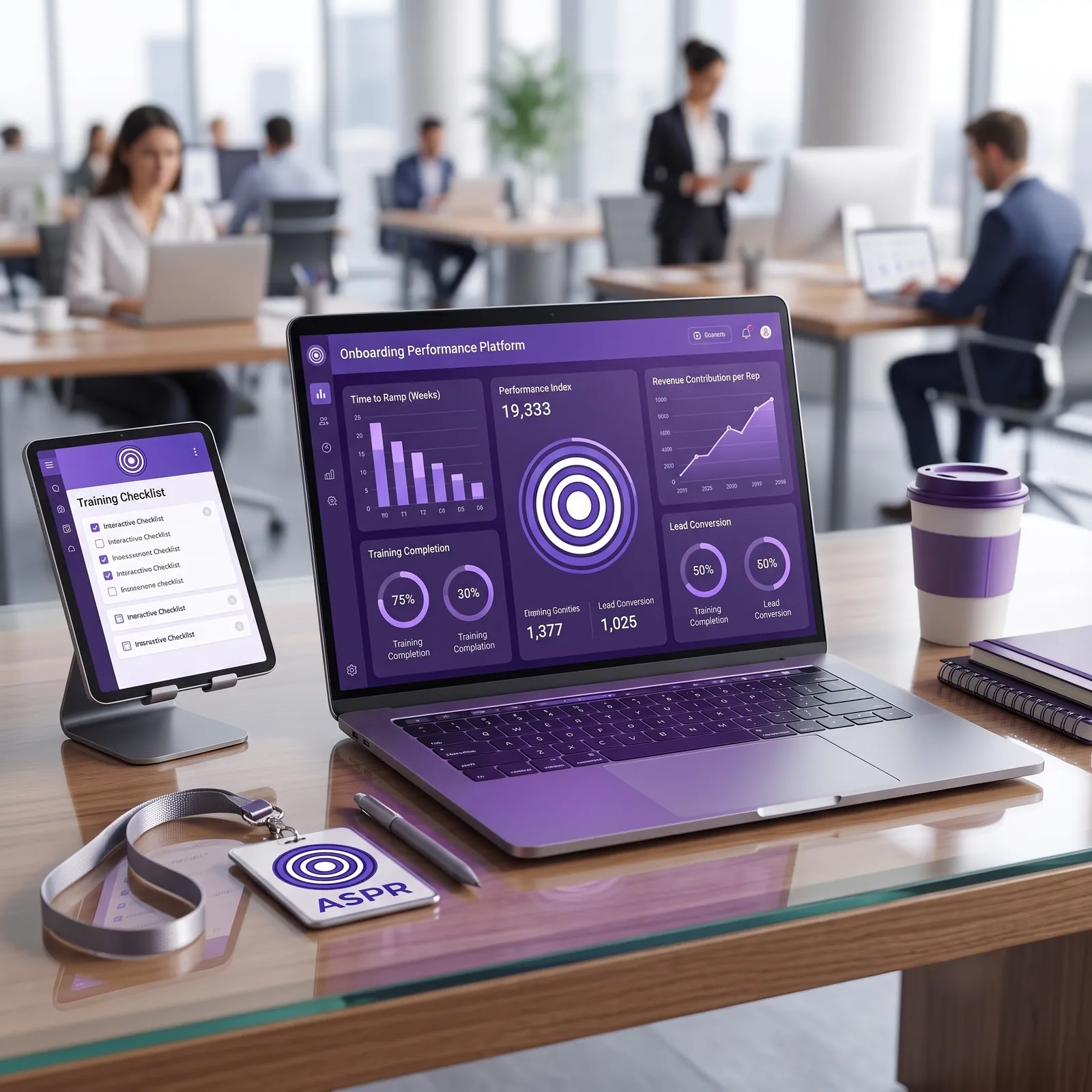
Sales onboarding has become one of the biggest challenges for revenue leaders. Hiring great sales talent is no longer enough—organizations must also ensure new hires become productive as quickly as possible.
This challenge is becoming increasingly difficult. Recent industry benchmarks show that average sales ramp time has increased from approximately 4.3 months in 2020 to nearly 5.7 months in 2024. For many organizations, that means new representatives may take almost six months before consistently contributing to revenue.
As buyer journeys become more complex and competition intensifies, companies are investing heavily in sales onboarding software that can accelerate learning, improve coaching, and reduce time-to-productivity. The rise of artificial intelligence is also transforming how sales teams are trained, enabling organizations to deliver personalized onboarding experiences at scale.
In this guide, we’ll explore the top sales onboarding tools for 2026, compare their strengths, and explain how modern organizations are using AI-powered onboarding to build high-performing revenue teams.
Key Takeaways
- Average sales ramp time has increased to nearly 5.7 months, making effective onboarding a critical driver of revenue growth.
- AI-powered sales onboarding platforms help accelerate productivity through personalized coaching, role-play simulations, and real-time performance insights.
- Structured onboarding programs can reduce ramp time, improve sales readiness, increase rep retention, and create more consistent customer experiences.
- This guide compares the 10 best sales onboarding tools for 2026, including ASPR, Mindtickle, Highspot, Seismic, Allego, Showpad, WorkRamp, Spekit, Trainual, and Second Nature.
- Learn the key features to evaluate, such as AI coaching, CRM integrations, analytics, sales simulations, certifications, and personalized learning paths.
- Discover best practices for implementing a successful sales onboarding program that helps new hires reach quota faster and drives long-term revenue growth.
Why Sales Onboarding Matters More Than Ever in 2026
The modern sales environment is significantly different from what it was just a few years ago.
Today’s sales representatives must navigate longer buying cycles, multiple decision-makers, increased competition, and increasingly informed buyers. As a result, onboarding is no longer simply an HR initiative—it has become a strategic revenue function.
Organizations that fail to onboard effectively often experience slower ramp times, inconsistent messaging, and lower sales productivity. Research suggests that structured onboarding programs can reduce ramp time by as much as 26% to 50%, helping companies generate revenue faster while improving employee confidence and retention.
Another growing challenge is turnover. Industry research indicates that nearly one in five sales representatives leave within their first 45 days due to poor onboarding experiences, unclear expectations, or insufficient training. This makes effective onboarding not only a productivity initiative but also a retention strategy.
Expert Insight
High-performing sales organizations increasingly view onboarding as the beginning of a continuous enablement journey rather than a one-time training event. The most successful companies combine onboarding, coaching, certifications, and ongoing learning into a single sales readiness program.
Key Sales Onboarding Statistics
Recent industry research highlights the growing importance of onboarding and sales enablement.
Sales Productivity Challenges
Many organizations report that new sales hires require several months before reaching full productivity.
This delay creates challenges such as:
- Lost revenue opportunities
- Increased management burden
- Higher training costs
- Inconsistent customer experiences
The Impact of Structured Onboarding
Companies with structured onboarding programs typically experience:
- Faster ramp times
- Improved employee retention
- Higher engagement levels
- Greater consistency across sales teams
AI Adoption in Sales Enablement
Artificial intelligence is becoming a major differentiator in onboarding programs.
Organizations are increasingly using AI to:
- Analyze sales conversations
- Deliver personalized coaching
- Identify skill gaps
- Recommend learning content
- Simulate real sales scenarios
This shift is enabling revenue teams to scale onboarding without significantly increasing management overhead.
What Makes a Great Sales Onboarding Tool?
The best sales onboarding platforms do much more than deliver training content.
Modern revenue teams need solutions that help representatives learn, practice, receive feedback, and continuously improve. This is one reason why AI-powered onboarding platforms have gained significant momentum in recent years.
According to recent sales enablement research, organizations using AI-assisted onboarding programs have reported meaningful reductions in ramp time while improving knowledge retention and coaching consistency.
AI-Powered Coaching
One of the most important trends shaping sales onboarding in 2026 is the rise of AI coaching.
Instead of relying exclusively on managers for feedback, modern platforms can automatically analyze conversations, identify skill gaps, and recommend personalized learning paths. This allows organizations to scale coaching across larger teams without increasing management overhead.
Expert Insight
The most effective onboarding programs balance AI-driven insights with human coaching. While AI can quickly identify patterns and recommend improvements, sales managers remain essential for strategic guidance, motivation, and real-world coaching.
Interactive Learning and Sales Simulations
Traditional onboarding often relies on presentations, documentation, and product training sessions. However, research consistently shows that people learn more effectively when they actively participate in the learning process.
This trend has fueled the growth of:
- AI roleplays
- Sales simulations
- Virtual buyer interactions
- Scenario-based learning
Leading organizations increasingly use simulations to help representatives practice conversations before engaging real customers.
How We Evaluated These Sales Onboarding Platforms
To create this list, we evaluated each platform based on several important criteria.
| Evaluation Criteria | Importance |
|---|---|
| AI Capabilities | High |
| Coaching Features | High |
| Sales Readiness Tools | High |
| Ease of Implementation | Medium |
| Analytics and Reporting | High |
| CRM Integrations | High |
| Scalability | High |
| User Experience | Medium |
| Content Management | Medium |
| Overall Value | High |
The platforms below represent some of the strongest sales onboarding solutions available in 2026.
Top Sales Onboarding Tools for 2026
1. ASPR
Best for AI-Powered Sales Readiness and Onboarding
ASPR is designed for organizations that want to accelerate onboarding while improving sales readiness through artificial intelligence.
The platform reflects a broader industry trend toward AI-powered enablement. As more organizations seek to reduce ramp time and deliver personalized coaching at scale, AI-first platforms like ASPR are becoming an increasingly attractive alternative to traditional onboarding systems.
ASPR combines onboarding, coaching, simulations, readiness assessments, and performance analytics into a single platform, helping revenue teams move beyond basic training programs and toward measurable business outcomes.
Why It Stands Out
A growing number of revenue leaders are shifting their focus from training completion rates to sales readiness metrics such as:
- Time-to-first-opportunity
- Time-to-first-deal
- Readiness scores
- Ramp-to-quota attainment
ASPR aligns closely with this trend by helping organizations measure and improve actual sales readiness rather than simply tracking course completion.
Key Features
- AI-powered sales coaching
- Sales readiness assessments
- Role-play simulations
- Personalized onboarding journeys
- Performance analytics
- Automated learning workflows
- Revenue-focused insights
Pros
- AI-first platform
- Scalable coaching programs
- Strong readiness capabilities
- Modern user experience
- Enterprise-ready architecture
Cons
- Advanced features may require implementation planning
Best For
- SaaS companies
- Revenue organizations
- Enterprise sales teams
- Sales enablement leaders
2. Mindtickle
Best for Sales Readiness Programs
Mindtickle is one of the most established platforms in the sales readiness category and is widely used by enterprise organizations looking to improve onboarding, coaching, and continuous enablement. Rather than focusing solely on content delivery, Mindtickle emphasizes sales readiness—ensuring representatives possess the knowledge, skills, and confidence required to perform effectively in customer-facing situations.
The platform combines onboarding, learning management, coaching, and certification capabilities into a unified experience, making it particularly attractive for organizations with mature enablement functions.
Key Features
- Structured onboarding programs
- Sales coaching workflows
- Readiness assessments
- Certification management
- Content delivery and learning paths
- Performance analytics and reporting
What We Like
Mindtickle’s strongest differentiator is its focus on measuring readiness rather than simply tracking course completion. Sales leaders can assess whether representatives are prepared to handle customer interactions before engaging in real sales conversations.
Considerations
While Mindtickle offers extensive functionality, implementation can require significant planning and administrative resources. Smaller organizations may find the platform more robust than necessary.
Best For
Large enterprises seeking a comprehensive sales readiness and enablement solution.
3. Highspot
Best for Sales Enablement and Content Management
Highspot has become one of the leading sales enablement platforms by helping organizations centralize sales content, training, coaching, and buyer engagement insights. The platform excels at ensuring sales representatives can easily access the right content at the right time while also supporting onboarding and continuous learning initiatives.
For organizations struggling with content sprawl, inconsistent messaging, or fragmented enablement processes, Highspot provides a strong centralized solution.
Key Features
- Content management and governance
- Sales training programs
- Coaching workflows
- Buyer engagement analytics
- Guided selling capabilities
- CRM integrations
What We Like
Highspot excels at connecting training with real-world selling activities. Sales teams can access onboarding resources, playbooks, competitive intelligence, and customer-facing content within a single ecosystem.
Considerations
Organizations focused heavily on sales readiness assessments or AI-driven roleplay may require additional specialized tools to complement Highspot’s capabilities.
Best For
Organizations looking for a unified sales enablement platform that combines onboarding, content management, and sales execution support.
4. Seismic
Best for Enterprise Revenue Enablement
Seismic is one of the most comprehensive revenue enablement platforms available today. Designed primarily for large enterprises, it helps organizations align onboarding, content management, training, coaching, and revenue operations within a single ecosystem.
Its scalability and extensive integration capabilities make it a popular choice among global organizations with complex sales structures.
Key Features
- Learning and onboarding programs
- Content automation
- Sales enablement tools
- Revenue intelligence integrations
- Coaching and certification capabilities
- Advanced reporting and analytics
What We Like
Seismic’s ability to combine content automation, enablement, and onboarding at enterprise scale makes it particularly valuable for organizations managing multiple products, regions, and sales teams.
Considerations
Due to its extensive feature set, Seismic often requires dedicated enablement resources and a well-defined implementation strategy.
Best For
Large enterprises seeking a scalable revenue enablement platform that supports onboarding, training, and content management.
5. Allego
Best for Video-Based Learning and Coaching
Allego takes a unique approach to onboarding by emphasizing video learning, peer collaboration, and coaching. The platform helps organizations create engaging learning experiences that improve knowledge retention and sales communication skills.
Video-based learning has become increasingly important in remote and hybrid work environments where traditional classroom-style training is less effective.
Key Features
- Video coaching
- Mobile learning
- Peer-to-peer knowledge sharing
- Sales practice exercises
- Learning reinforcement tools
- Performance tracking
What We Like
Allego’s focus on video-driven learning helps sales teams learn from real-world examples while making coaching more scalable and engaging.
Considerations
Organizations seeking highly structured onboarding workflows or advanced readiness assessments may need additional enablement tools alongside Allego.
Best For
Sales organizations that prioritize coaching, communication skills development, and collaborative learning experiences.
6. Showpad
Best for Sales Training and Content Delivery
Showpad combines sales training and content management to help organizations create more consistent buyer experiences. The platform enables sales representatives to access learning materials, playbooks, and customer-facing content from a centralized location.
This integrated approach helps bridge the gap between onboarding and day-to-day selling activities.
Key Features
- Sales training programs
- Content management
- Coaching support
- Buyer engagement tracking
- Learning analytics
- Mobile accessibility
What We Like
Showpad’s strength lies in connecting training content directly to sales execution, ensuring representatives can easily apply what they learn.
Considerations
Organizations seeking highly advanced AI coaching or readiness assessment capabilities may require complementary solutions.
Best For
Companies looking to unify sales training and content delivery within a single platform.
7. WorkRamp
Best for Structured Learning Programs
WorkRamp is a flexible learning platform that supports employee onboarding, sales training, partner enablement, and customer education. Its intuitive interface and certification capabilities make it a popular option for growing organizations.
The platform emphasizes structured learning paths that guide employees through onboarding milestones and skill development programs.
Key Features
- Learning paths
- Certification programs
- Training automation
- Progress tracking
- Reporting dashboards
- Content management
What We Like
WorkRamp provides a user-friendly experience while offering enough flexibility to support both onboarding and ongoing training initiatives.
Considerations
Organizations seeking advanced AI-powered coaching and sales simulations may require additional specialized tools.
Best For
Companies looking for scalable onboarding and certification programs with strong administrative controls.
8. Spekit
Best for Just-in-Time Learning
Spekit takes a different approach to onboarding by embedding learning directly within daily workflows. Rather than requiring employees to search through training portals, Spekit surfaces relevant information exactly when it is needed.
This approach helps reduce information overload and improves knowledge adoption.
Key Features
- In-app guidance
- Workflow-based learning
- Knowledge management
- Process documentation
- Searchable knowledge base
- CRM integrations
What We Like
Spekit is particularly effective at reinforcing learning after onboarding and helping teams adopt new processes, tools, and messaging.
Considerations
Organizations looking for comprehensive onboarding programs, certifications, or coaching frameworks may need additional enablement solutions.
Best For
Fast-growing organizations that want to improve knowledge accessibility and workflow adoption.
9. Trainual
Best for Process Documentation and Standardization
Trainual focuses on helping organizations document business processes and standardize employee onboarding. It simplifies knowledge transfer and ensures employees have clear guidance on policies, procedures, and operational workflows.
For small and mid-sized businesses, Trainual can serve as a foundational onboarding system.
Key Features
- Process documentation
- Employee onboarding
- Training modules
- Knowledge management
- Standard operating procedures
- Progress tracking
What We Like
Trainual makes it easy to organize institutional knowledge and create repeatable onboarding experiences.
Considerations
The platform is not specifically built for advanced sales readiness, AI coaching, or sales simulations.
Best For
Small and mid-sized organizations seeking a straightforward onboarding and process documentation solution.
10. Second Nature
Best for AI Sales Roleplay and Practice
Second Nature has become a leader in AI-powered sales roleplay by enabling representatives to practice conversations with virtual buyers. As organizations increasingly recognize the importance of experiential learning, AI simulations have become a valuable component of modern onboarding programs.
The platform helps sales teams build confidence and improve performance before engaging actual prospects.
Key Features
- AI-powered roleplays
- Sales simulations
- Readiness scoring
- Automated feedback
- Coaching recommendations
- Performance analytics
What We Like
Second Nature provides realistic practice environments that help representatives improve objection handling, discovery conversations, and presentation skills.
Considerations
While highly effective for practice and coaching, organizations may still require a broader onboarding or enablement platform to manage training content and certifications.
Best For
Organizations that want to strengthen onboarding through realistic sales simulations and AI-driven coaching.
Sales Onboarding Software Comparison Table
| Platform | AI Coaching | Roleplay | Analytics | CRM Integration | Best For |
|---|---|---|---|---|---|
| ASPR | Yes | Yes | Advanced | Yes | AI-Powered Sales Readiness |
| Mindtickle | Yes | Limited | Advanced | Yes | Sales Readiness |
| Highspot | Limited | No | Strong | Yes | Sales Enablement |
| Seismic | Limited | No | Strong | Yes | Enterprise Enablement |
| Allego | Yes | Yes | Moderate | Yes | Video Coaching |
| Showpad | Limited | No | Moderate | Yes | Training & Content |
| WorkRamp | No | No | Moderate | Yes | Learning Programs |
| Spekit | No | No | Moderate | Yes | Just-in-Time Learning |
| Trainual | No | No | Basic | Limited | Process Training |
| Second Nature | Yes | Advanced | Strong | Yes | AI Roleplay |
Which Sales Onboarding Tool Is Right for Your Business?
The best platform depends on your organization’s goals, sales complexity, and enablement maturity.
Choose ASPR if you need:
- AI-powered onboarding
- Revenue readiness programs
- Sales coaching at scale
- Faster ramp times
- Advanced sales simulations
Choose Mindtickle if you need:
- Enterprise sales readiness
- Certification programs
- Mature enablement workflows
Choose Highspot or Seismic if you need:
- Extensive content management
- Enterprise enablement capabilities
- Large-scale sales operations
Choose Second Nature if your primary focus is AI-driven roleplay and practice.
In the next section, we’ll explore implementation best practices, common onboarding mistakes, future trends, case studies, and frequently asked questions to help you maximize the value of your sales onboarding investment.
How to Successfully Implement a Sales Onboarding Platform
Selecting the right sales onboarding software is only half the battle. The most successful organizations pair great technology with a structured onboarding strategy.
A well-planned implementation ensures new hires receive consistent training, managers gain visibility into progress, and sales teams achieve faster productivity.
Step 1: Define Clear Onboarding Goals
Before launching your onboarding program, identify what success looks like.
Common objectives include:
- Reducing ramp time
- Increasing quota attainment
- Improving product knowledge
- Standardizing sales messaging
- Increasing employee retention
- Enhancing customer experience
Document measurable KPIs that can be tracked throughout the onboarding process.
Step 2: Build Role-Specific Learning Paths
Different sales roles require different skills.
SDR/BDR Onboarding
Focus on:
- Prospecting
- Lead qualification
- Cold outreach
- CRM usage
- Call handling
Account Executive Onboarding
Focus on:
- Discovery calls
- Product demonstrations
- Objection handling
- Negotiation
- Closing techniques
Customer Success Onboarding
Focus on:
- Customer onboarding
- Adoption strategies
- Expansion opportunities
- Renewals
- Customer communication
Personalized learning paths improve engagement and knowledge retention.
Step 3: Combine Training with Practice
Knowledge alone does not create successful sales professionals.
Representatives need opportunities to apply what they learn through:
- Role-playing exercises
- Sales simulations
- Mock discovery calls
- Objection handling scenarios
- Product demo practice
AI-powered platforms such as ASPR and Second Nature help teams scale practice sessions efficiently.
Step 4: Reinforce Learning Continuously
Research consistently shows that employees forget a significant portion of training without reinforcement.
Organizations should provide:
- Weekly coaching sessions
- Knowledge assessments
- Certification renewals
- Refresher training
- Manager feedback loops
Continuous learning ensures onboarding investments deliver long-term value.
Step 5: Measure Results and Optimize
Track onboarding effectiveness using:
- Time-to-productivity
- Time-to-first-opportunity
- Time-to-first-deal
- Training completion rates
- Certification scores
- Revenue contribution
Regularly analyze performance data and update onboarding programs based on findings.
Final Thoughts
Sales onboarding has become one of the most important investments revenue organizations can make. As buyer expectations continue to rise and sales environments become more complex, organizations need modern onboarding solutions that go beyond traditional training.
The best sales onboarding tools for 2026 combine AI-powered coaching, simulations, analytics, certifications, and continuous learning to help sales teams become productive faster.
For organizations seeking a future-ready solution, ASPR stands out by combining onboarding, coaching, readiness assessments, and AI-powered sales development in a single platform. By implementing the right technology and following proven onboarding best practices, businesses can reduce ramp time, improve sales performance, and drive sustainable revenue growth.