
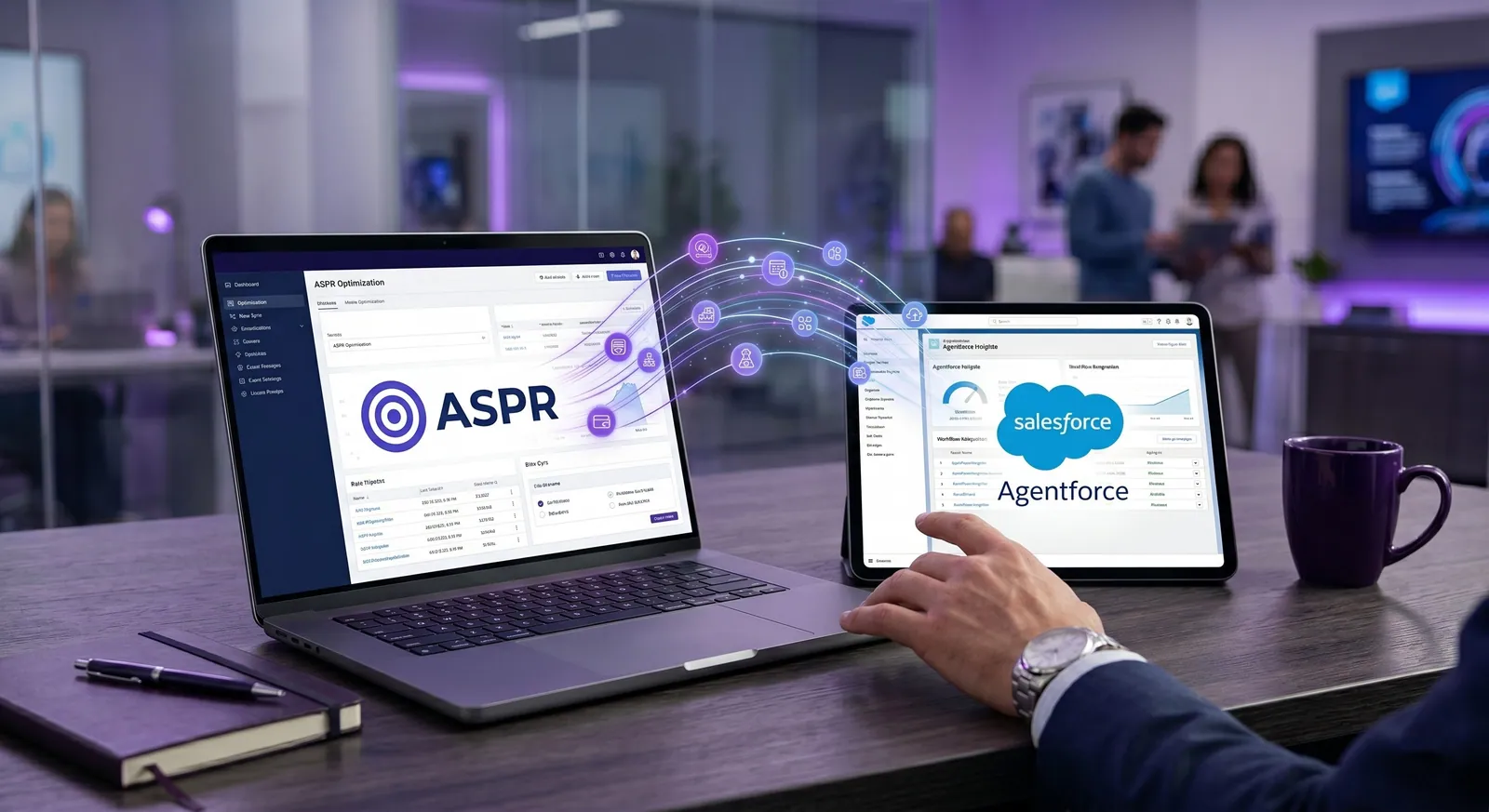
AI is rapidly transforming CRM systems from passive databases into operational platforms capable of automating workflows, orchestrating actions, and guiding revenue teams in real time.
With the launch of Salesforce Agentforce, Salesforce is pushing this transformation even further by embedding AI agents directly inside the CRM experience. The vision is clear: reduce manual work, improve execution, and enable AI-driven workflows across the revenue organization.
But there is a problem many organizations still underestimate:
AI is only as effective as the data it operates on.
This remains one of the biggest operational challenges in modern CRM environments. According to research from Validity, 76% of organizations say less than half of their CRM data is complete and accurate. At the same time, sales reps continue to spend significant time manually updating systems instead of selling.
This creates a major gap between AI capability and real-world execution.
Even the most advanced AI systems struggle when:
- CRM records are incomplete
- Deal updates are delayed
- Pipeline data becomes inconsistent
- Customer interactions are missing context
This is where ASPR.ai plays a critical role.
While Agentforce brings AI directly into Salesforce workflows, ASPR ensures the underlying CRM data remains accurate, structured, and continuously updated using real sales activity.
Together, they create a much stronger foundation for AI-driven revenue execution.
What Agentforce Does Well
Salesforce Agentforce is designed to bring intelligence into CRM workflows.
It excels at automating processes and enabling AI-driven execution across the Salesforce ecosystem.
With Agentforce, organizations can:
- Automate workflows directly inside Salesforce
- Run AI agents on CRM data
- Orchestrate processes across teams and tools
This makes Salesforce more than just a system of record—it becomes a system capable of intelligent action.
However, there’s a dependency that cannot be ignored.
Where Things Break Today
Despite the power of Agentforce, most teams struggle with the same operational challenges.
Sales reps don’t consistently update CRM. Deal data is often incomplete or delayed. Workflows depend heavily on manual inputs, and as a result, the system never fully reflects what’s actually happening in the pipeline.
This creates a ripple effect:
- CRM data becomes unreliable
- Automation loses accuracy
- AI outputs become inconsistent
In simple terms, Agentforce can only be as effective as the CRM data it receives.
What ASPR Does Differently
ASPR is built to solve exactly this problem.
Instead of relying on reps to manually input data, ASPR runs alongside Salesforce and handles the work that is typically avoided or delayed.
It automatically captures insights from meetings, emails, and deal signals—ensuring that real sales activity is reflected inside the CRM.
Beyond just capturing data, ASPR:
- Updates CRM with real deal context instead of static inputs
- Structures qualification, actions, and next steps
- Provides coaching, training, and guidance at the opportunity level
The result is a CRM that is no longer dependent on manual effort.
Instead, it becomes accurate by default.
Agentforce vs ASPR: Understanding the Difference
| Capability | Agentforce | ASPR |
|---|---|---|
| AI inside Salesforce | Yes | Supports Salesforce workflows |
| Workflow automation | Yes | Yes |
| Real-time deal capture | Limited | Yes |
| CRM auto-updates | Partial | Yes |
| Opportunity-level coaching | Limited | Yes |
| Meeting intelligence | Limited | Yes |
| Sales execution workflows | Partial | Yes |
| Pipeline context enrichment | Limited | Yes |
The relationship is not competitive.
The platforms solve different but complementary problems:
- Agentforce focuses on AI orchestration inside Salesforce
- ASPR focuses on accurate execution data and sales workflow intelligence
Together, they strengthen the entire revenue operating system.
How ASPR Strengthens Agentforce
The combination of ASPR and Agentforce creates a powerful feedback loop between data and execution.
Better Data
Agentforce gains access to complete, real-time, and structured deal data. This eliminates gaps caused by delayed or missing updates.
Better Execution
Workflows are triggered based on actual deal signals—not assumptions or outdated entries. This makes automation far more reliable and impactful.
Better Adoption
Sales reps no longer need to change their behavior or spend time logging activities. The system works in the background, allowing them to focus purely on selling.
A Simple Way to Think About It
To understand the relationship clearly:
- Agentforce = AI inside Salesforce
- ASPR = AI inside the selling workflow
Individually, they solve different problems.
Together, they transform Salesforce into something much more powerful:
- A system that runs itself
- A platform that reflects real-time deal activity
- An environment where reps focus only on closing deals
Why Salesforce Teams Should Care
For revenue teams, this isn’t just about technology—it’s about outcomes.
When ASPR and Agentforce work together, organizations see:
- Faster time-to-value from AI investments
- Higher data quality across accounts and opportunities
- More consistent pipeline visibility and forecasting
- Stronger expansion opportunities after the initial deal
Most importantly, it removes friction from the sales process while improving execution quality.
Conclusion
Salesforce Agentforce represents the future of AI inside CRM systems.
But even the most advanced AI cannot deliver meaningful outcomes without accurate, structured, and real-time operational data.
That is the layer ASPR.ai provides.
- Agentforce brings intelligence
- ASPR brings execution accuracy
- Together, they create reliable AI-driven revenue operations
The organizations that succeed with AI in Salesforce will not simply deploy more automation.
They will build systems where:
- CRM data stays continuously accurate
- AI workflows operate on real-world activity
- Sales execution becomes standardized
- Revenue operations become scalable
That is what transforms Salesforce from a passive database into an active revenue execution platform.